


The quality of engraving is what transforms glassware from ordinary to exceptional. Across drinkware, glass awards and paperweights, clarity, consistency and surface feel are essential to achieving a truly premium finish.
For many years, sandblasting was widely regarded as the gold standard for glass engraving — and for good reason. However, engraving technology has continued to evolve. With the introduction of our advanced UV laser engraving system, we’re now able to achieve the same high-quality finish using laser engraving, offering exceptional precision and consistency across a wide range of glassware.
This updated guide explains the differences between laser engraving and sandblasting, when each process works best, and how modern laser technology has changed what’s possible.
Sandblasted Glass Engraving
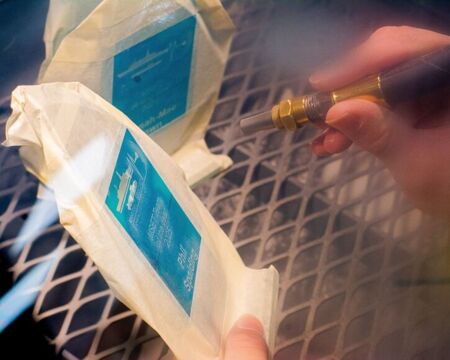
The Traditional Gold Standard
Sandblasting engraves glass by firing fine abrasive aluminium oxide or silicon carbide (commonly known as ‘sand’) at the surface through a stencil. This process physically etches the glass, creating a deep, smooth engraving that has long been associated with premium awards.
Key Benefits of Sandblasting
High-contrast engraving with a frosted finish
Smooth to the touch, with no sharp edges
Excellent depth and longevity
Ideal for bold text, logos and traditional designs
Because of these qualities, sandblasting remains a popular choice across many types of glassware, including traditional trophies, presentation awards and selected drinkware designs.
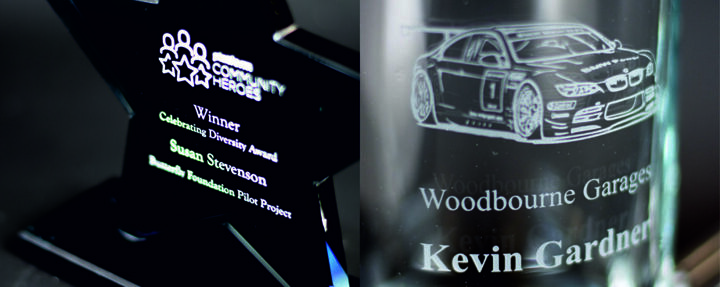
Considerations
Requires masking and setup, which can limit very fine detail
Less flexible for rapid design changes or short runs
Laser Engraving on Glass: Then vs Now
Earlier Laser Engraving Methods
Historically, laser engraving glass could be inconsistent. Earlier systems often struggled with:
Poor contrast on certain glass types
Micro-fracturing or flaking of the surface
A rough or uneven finish to the touch
Excessive heat build-up, which could stress the glass and affect the quality of the engraved finish
For these reasons, sandblasting was widely preferred for high-quality glass awards.
Modern UV Laser Engraving
Technology has advanced significantly. Our UV laser engraving system is specifically suited to glass, producing a controlled, refined mark without damaging the surrounding surface.
Key Benefits of UV Laser Engraving
Clean, precise engraving with excellent clarity
Smooth finish without sharp edges or flaking
Consistent results across detailed text and logos
Ideal for intricate designs and fine typography
This advancement means laser engraving is now a genuine alternative across a wide range of glassware — including awards, drinkware and glass paperweights — where precision and consistency are critical.
Laser Engraving vs Sandblasting: At a Glance
| Sandblasting | UV laser Engraving | |
|---|---|---|
| Finish | Deep, frosted | Clean, refined |
| Detail capability | Best for bold designs | Excellent for fine detail |
| Surface feel | Smooth | Smooth |
| Consistency | Excellent | Excellent |
| Efficiency | Best for smaller runs | Highly efficient for larger quantities |
How We Choose the Right Engraving Method
Because both sandblasting and modern UV laser engraving produce an exceptionally high-quality finish, we do not ask customers to choose between the two.
Instead, we select the most appropriate engraving method in-house, based on the practical requirements of each order, including:
Quantity – laser engraving is often more time-efficient for larger runs
Level of detail – laser engraving allows for finer text and more intricate designs
Glass type and shape – ensuring the best possible engraved result
This approach ensures every piece of glassware receives the same high standard of finish, regardless of the process used.
Speak to Our Team
For advice, pricing or to discuss your glass trophies and awards, please get in touch with our team. We’ll help you choose the right engraving method for a result that looks and feels exceptional.